

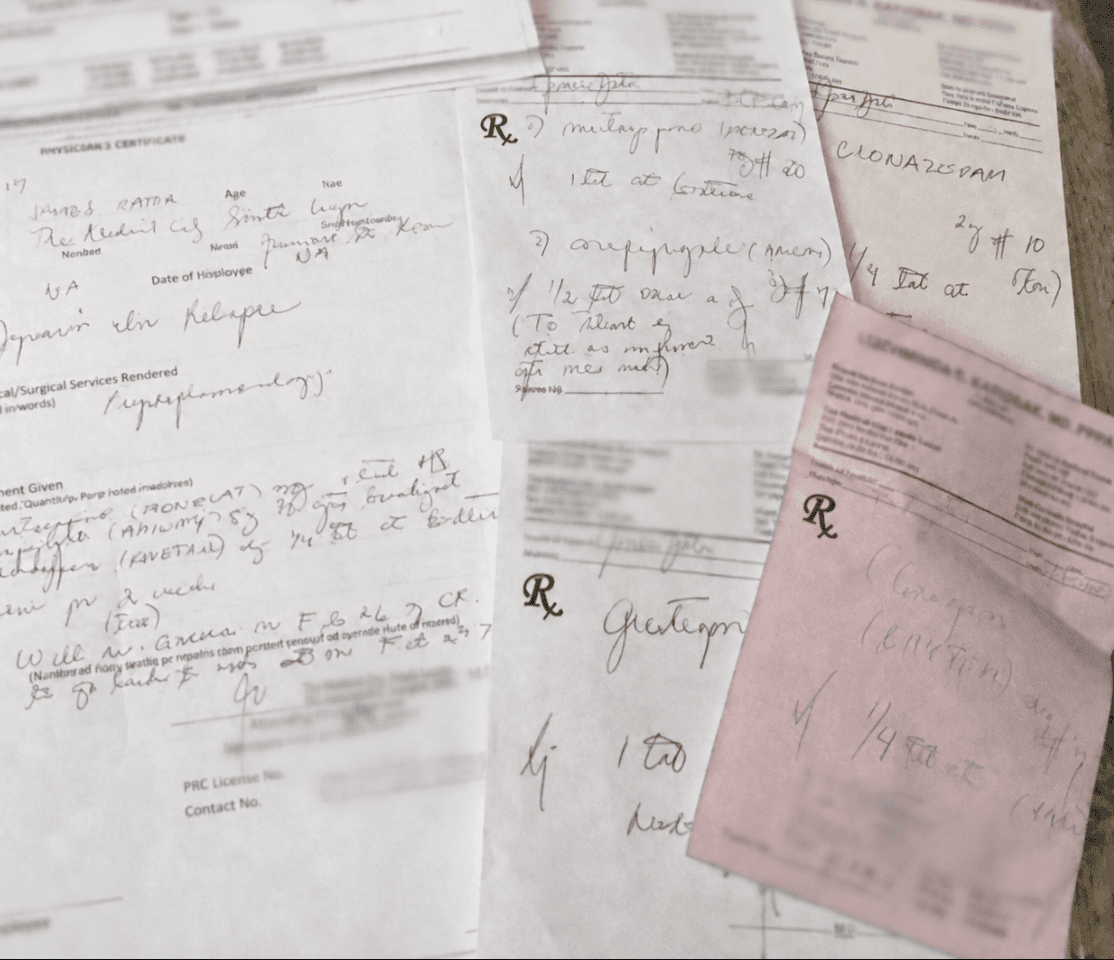
A large pharmaceutical distributor receives a constant flow of orders from pharmacies, sales representatives, and customers. Many arrive as handwritten sheets, photos, receipts, messages, or documents.
Operations teams had to interpret every order, find the correct product and customer records, and manually enter each quantity into the company's internal system. At distribution scale, that repetitive work became an expensive bottleneck exposed to transcription errors, processing queues, and missed orders.
The challenge
The system wasn't the problem
The distributor already had an inventory and order-management system. The problem was getting real-world sales orders into it.
An employee might receive a handwritten order, inspect the handwriting, identify each pharmaceutical product, determine the quantity, search for the correct inventory item, and create the sales order manually. Across hundreds or thousands of order lines, skilled employees were spending their time moving information from one format into another.
Difficult handwriting required extra checking, orders waited in queues during busy periods, and an overlooked order could represent revenue that was never processed.
The workflow
AI inserted into the existing process
When an order arrives, the agent converts the unstructured document or image into structured order data, then compares it with known products, packaging formats, SKUs, and live inventory records.
Human in the loop
The goal wasn't to remove people from the process. It was to remove people from the repetitive part of the process.
High-confidence product and quantity matches continue automatically. If handwriting is unclear, multiple products could match, inventory data conflicts, or a business rule is triggered, the agent sends only that exception to an employee.
The employee confirms or corrects the result and the transaction continues. Operations teams supervise the small portion of orders where human judgment is valuable instead of manually entering every order.
What changed
Faster operations without disrupting the business
The result
Every valid order becomes a system record
Orders are processed in seconds. Handwritten documents become structured sales records. Inventory is checked as part of the workflow. Humans step in only when the AI needs help, and the distributor's existing systems remain in place.
This isn't another AI tool employees need to operate. It's an AI operations layer quietly doing the repetitive work between incoming customer orders and the systems the company already trusts.
Put your manual workflows on autopilot
Connect AI Agents to the tools your team already uses—without replacing your systems or changing how customers work.
Talk to us